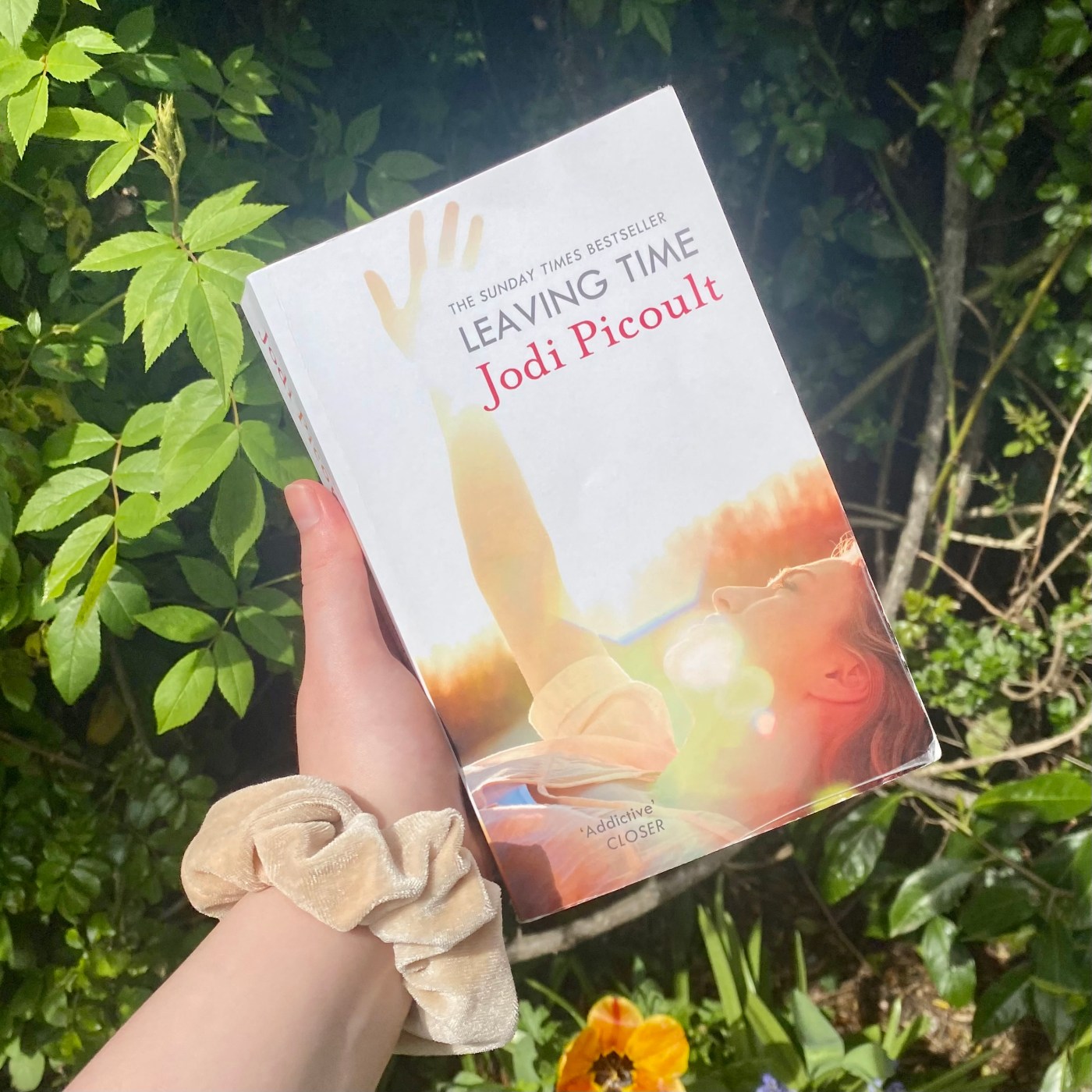
*spoiler-free*
10 years ago, Alice Metcalf vanished after an accident, leaving her daughter Jenna to deal with the mystery of her mother’s disappearance. Leaving Time introduces 13-year-old Jenna, who is looked after by her grandmother, and decides to take matters into her own hands to find her mother. We go on the journey with her where she meets Serenity, a local psychic, and Virgil, a private detective who originally worked on the case. Jenna is looking to find some answers to the questions she has been asking her whole life: where is her mother? Is she alive or dead? Why did her mother leave her as a baby? Why has her grandmother not fought harder for an answer?
This is the first book I have read by Picoult and so it took some time for me to adjust to her writing. Picoult writes metaphorically and so I found this slowed down the pace of the book quite considerably. Alice is a research scientist and so she spends her career working with elephants in sanctuaries, monitoring and interacting with them for her research. As a result, a large portion of Leaving Time details lots of factual information about the behaviour of elephants. Whilst this did interest me initially, by the time I reached the end of this book, this was repetitive, and I felt I had read half of a non-fiction book due to its scientific nature. There were quite a few chapters that focused on elephants in general that could have been removed as it was not always relevant to the plot and contextual information had already been provided. Whilst I appreciate the amount of research Picoult undertook to include this in her book this sense of information dumping made some chapters lengthy. Therefore, I would skim read these chapters which made the overall reading experience quite frustrating.
The book is divided into different characters and their perspective, going between Alice from the past leading up to the accident and Jenna, Serenity and Virgil who are in the present-day seeking answers. I enjoyed the trios’ interactions, despite the unusual connections between the three. Each character appears to share similar experiences which all involve themes around death, grief, and abandonment.
My main disappointment with this book was the plot twist around what really happened with Alice and Jenna on the day of the accident and how this was revealed. Whilst I did not expect this, I found the twist so out of place that it made me second guess whether I had read the book correctly. All the main plot questions around Alice and Jenna were now resolved but the revelation triggered a new set of questions that were never answered as some scenes in the book now did not make sense. The complete change in narrative threw me off and so I headed to Goodreads to gauge the general consensus and found that many readers were also confused and had similar questions to myself.
Leaving Time is a book that does not fit neatly into one genre. Whilst the story is fiction, the many chapters focused on elephants made it feel non-fiction. I found each chapter was one extreme to another, going from solid facts around herds of elephants to then psychic powers and philosophical debates around the Sixth sense. This book is definitely a slow burner, but the second half does pick up a little more.
From reading other reviews of Leaving Time, this appears to be a Marmite read where people either love or hate the story. Unfortunately for me, this one was a miss, but from researching Picoult, Leaving Time appears to be a book where she tried a new style of writing. I’d be interested to read another one of her books in due course and see if this is the case. I am glad I persevered with the book, but unless you really love elephants, this will not be your easiest read!
2/5 stars
 Soph's Library
Leave a comment